Trump vs. Banks: The Battle for the CLARITY Act Explodes
Intelligence Bureau
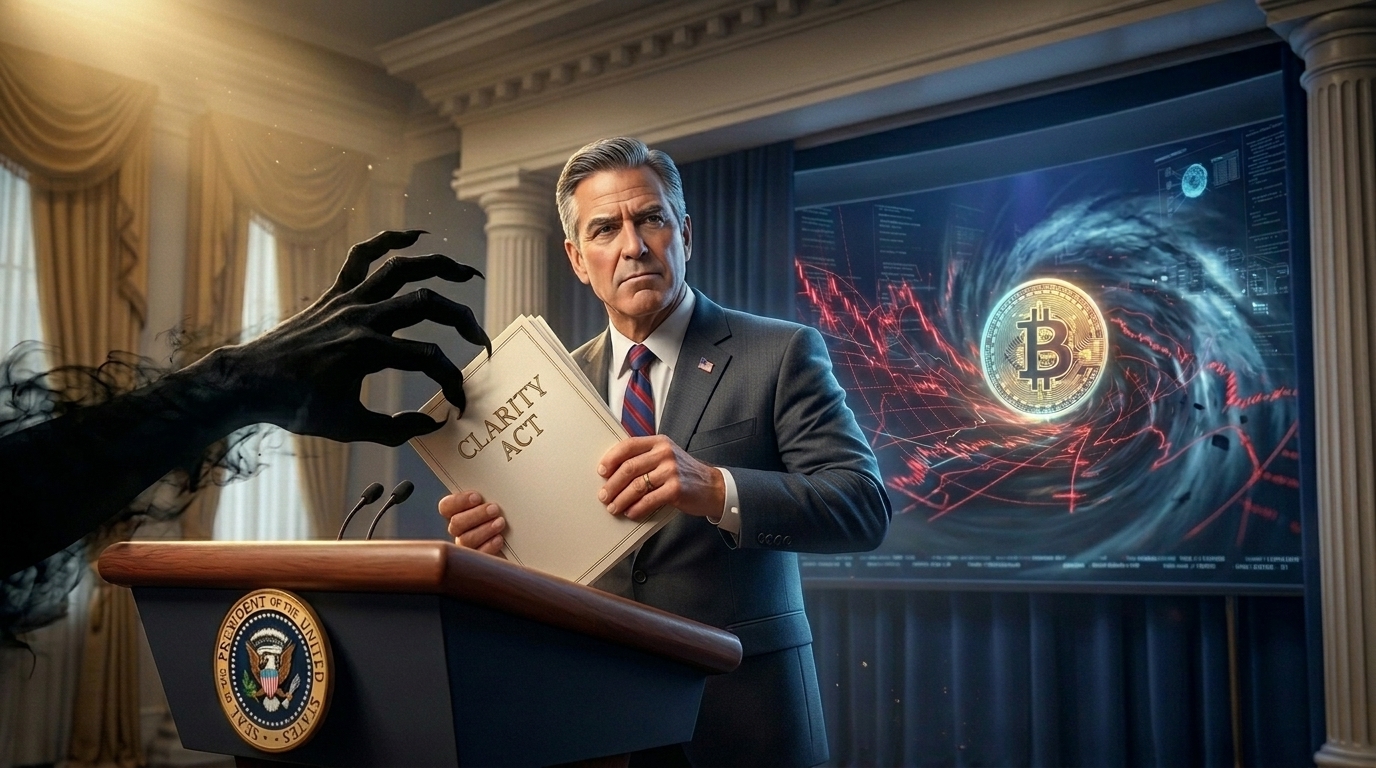
In a stunning escalation of his administration’s pro-crypto agenda, President Donald J. Trump has publicly launched a rhetorical offensive against the mainstream U.S. banking establishment. During a televised address from the White House late last night, March 6, 2026, Trump accused major financial institutions of "holding the CLARITY Act hostage." The President argued that this resistance is not just stifling domestic innovation but is a strategic failure that risks ceding technological leadership to global competitors, specifically China.
The "CLARITY Act" (Clarifying Lawful Oversight and Ensuring Compliance for Digital Assets Act) is a cornerstone piece of legislation aimed at providing a comprehensive federal regulatory framework for digital assets, including stablecoins and market structure. The administration sees it as crucial for bringing the $3 trillion crypto market out of the regulatory gray area. However, traditional banks have voiced significant concerns, primarily regarding the potential migration of deposits to yield-bearing stablecoins.
Trump’s aggressive stance marks a critical juncture. It shifts the CLARITY Act from a purely legislative battle to a public, highly politicized confrontation. "The big banks don't like competition," Trump declared, his rhetoric echoing the anti-establishment sentiment of his campaigns. "They are trying to kill this bill because they know it means they can't overcharge you anymore. They are putting their profits above the future of American finance."
The global market significance of this development is profound. A successful passage of the CLARITY Act could unlock trillions of dollars in institutional capital currently sidelined by regulatory ambiguity. Conversely, its failure would keep the U.S. in a "regulation by enforcement" posture, driving innovation offshore. The administration is now explicitly linking crypto adoption to national security and global competitiveness, raising the stakes to their highest level yet.
🌍 GLOBAL MARKET IMPACT
The market response to Trump’s direct attack on the banks has been one of volatile anticipation.
Investor Sentiment: Crypto-native investors are bullish, viewing Trump’s personal involvement as a strong indicator that the CLARITY Act will eventually pass, even if it requires significant political maneuvering. This hope is tempering the "Extreme Fear" seen earlier in the week due to geopolitical tensions.
Institutional Reaction: Mainstream financial institutions are in damage control mode. The American Bankers Association (ABA) quickly issued a statement denying allegations of stalling, reiterating their concerns that the current bill does not provide sufficient "safeguards for financial stability." Privately, bank lobbyists are worried this public spat will make compromise harder.
Regional Impact: This is primarily a U.S. story, but its waves are global. Europe, having already implemented MiCA, is watching closely to see if the U.S. can create a competitive counterweight. In Asia and the Middle East, jurisdictions that have been aggressive in attracting crypto firms see this political deadlock as an extended window of opportunity.
🧠 ANALYST INSIGHT
Analysts are split on the effectiveness of Trump’s "bully pulpit" strategy. Veteran political strategists suggest this public shaming could pressure moderate senators to support the bill. However, financial analysts are concerned it could entrench bank opposition. "Trump has essentially made the CLARITY Act a 'loyalty test' against Wall Street," noted a senior political risk analyst at Eurasia Group. "This ensures maximum media coverage, but it also raises the political cost of any bank seen as helping the administration."
Others argue that the threat to China is a powerful narrative. "By framing crypto adoption as a national security imperative against China, Trump is tapping into one of the few bipartisan sentiments remaining in Washington," said a policy analyst at the Blockchain Association. "This could be the key to unlocking support from more hawkish members of Congress."
⚠️ RISK FACTORS
Political Gridlock: The most significant risk is that Trump’s aggressive stance will backfire, making it impossible to find the necessary compromise. If the bill stalls indefinitely, the crypto market will continue to suffer from the current regime of regulation by enforcement.
Economic Stability: The banks' core concern—the draining of deposits into stablecoins—is not entirely without merit. A poorly designed bill could, in theory, trigger stability risks that Trump’s political rhetoric ignores.
Market Whiplash: Crypto prices are now highly sensitive to regulatory news. Every tweet, press conference, and leaked draft of the bill will likely trigger short-term market volatility.